Why Your Follow-Up Shouldn't Be on Autopilot
You hit send on the proposal. It's out there. And then: silence.
Not all silence means the same thing. A proposal that hasn't been opened is a different situation from one that's been read three times but not signed. One is a timing issue. The other is a conversation waiting to happen. Treating them the same way, with the same follow-up, sent at the same time, to every client, is how good deals go cold.
The follow-up isn't the awkward part of the sales process. Not knowing which silence you're dealing with. That's the awkward part.
The three places deals go quiet
Not every stalled proposal is the same problem, and Better Proposals' analytics give you enough context to tell them apart. Here's what each stage actually looks like, and what it's telling you.
Sent, not opened
Your client hasn't seen it yet, or it landed at a bad time. Before you follow up, check whether there's a delivery issue or whether they simply haven't had a chance. A gentle check-in here is perfectly reasonable. You're not chasing, you're checking in.
Opened, not signed
This is where it gets interesting. If your analytics show they've opened the proposal multiple times and spent a long time on the pricing section, that's hesitation over cost.
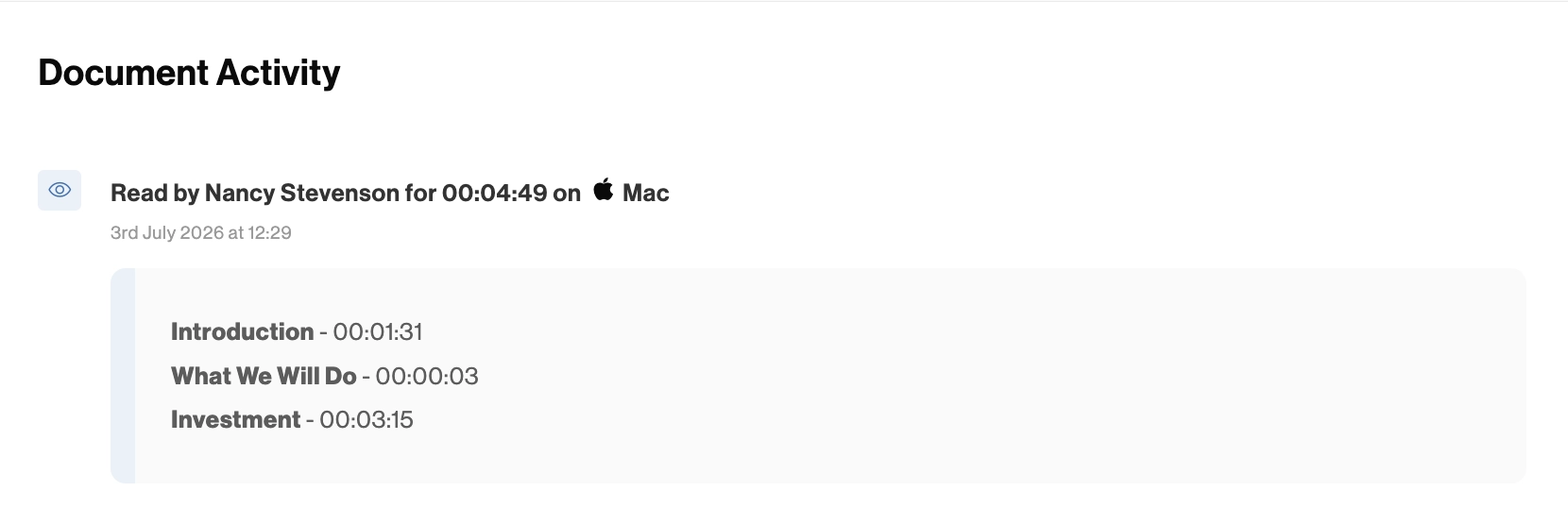
If they lingered on the scope of work, they might have questions about what's included. If they opened it once and haven't been back, they may have been interrupted and forgotten about it. Each of those is a different follow-up conversation, and knowing which one you're having changes everything.
Signed, not paid
The deal is done in spirit but not in practice. A timely reminder here isn't pushy. It's professional.
Each stage calls for a different approach. Which is exactly why handing all three over to a generic scheduled email is the wrong move.
What happens when you put follow-ups on autopilot
Picture this: your proposal goes out on a Monday. Three days later, your client gets an email. It reads something like: "Hi [First Name], just checking in on the proposal I sent over. Let me know if you have any questions!"
Your client, who has been sitting on the proposal because they're mid-budget-approval with their own boss, reads that email and thinks one of two things. Either nothing, because it's so forgettable it disappears. Or worse: they notice it's a form email, sent on a timer, and it makes the whole engagement feel a little less personal than it did before.
A blanket follow-up sent to everyone at day three doesn't know your client is mid-budget-approval. It doesn't know they opened the proposal four times on Thursday. It doesn't know this particular client prefers a phone call over an email.
You do.
What Nudge actually does
Different proposal stages need different conversations. A client who hasn't opened the proposal needs a different message from one who's read it twice and stalled on the pricing page. Generic automation ignores that context entirely. Nudge gives it back to you.
Nudge, available on Premium and Enterprise plans in Better Proposals, watches where each proposal stands, tracks how many days have passed since the last stage, and tells you when it's time to act. You get an email notification and an in-app alert. Then you decide what to do with that information.
Here's how it works in practice. You build a Nudge campaign and assign it to your proposals. Inside the campaign, you set up notifications for each stage (sent not opened, opened not signed, signed not paid) and choose how many days after each stage the notification should fire.
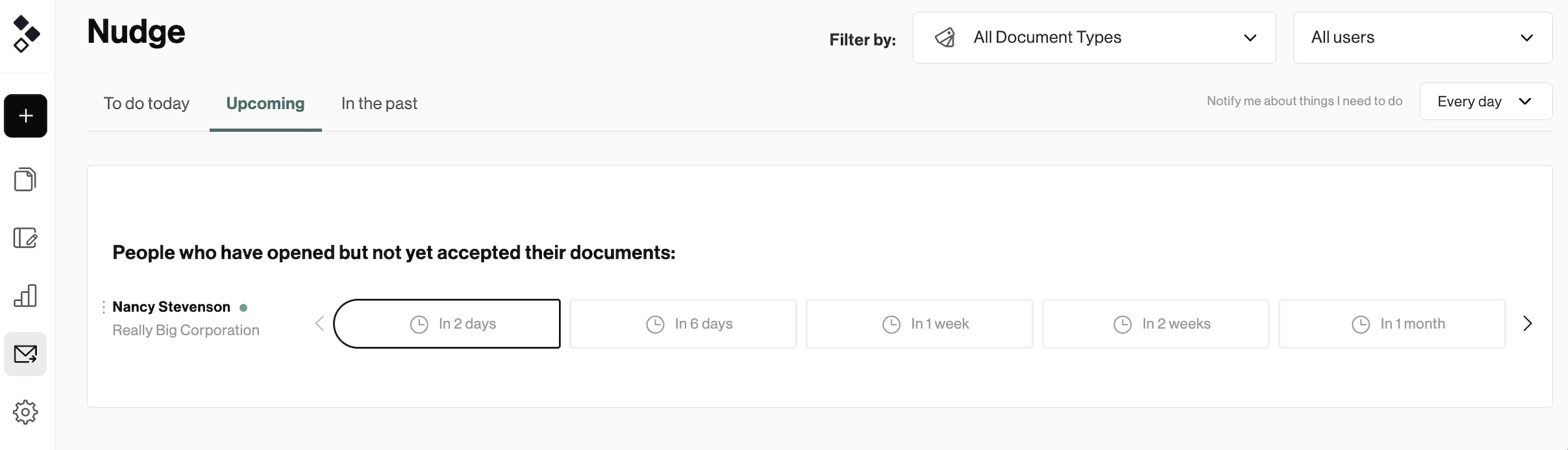
Three days with no open? You'll know. A week since they read it with no signature? You'll know that, too.
It takes the mental load off. You're not checking in on every proposal manually or second-guessing whether you've left it too long. Nudge handles the watching. You handle the conversation, with the context to make it count.
The case for staying in the loop
There's a reason experienced salespeople don't fully hand off their follow-ups. The moment between a client reading a proposal and signing it is exactly when questions come up, hesitations surface, and decisions get made. Being present at that moment, with the right message at the right time, is often what closes the deal.
Nudge keeps you present without keeping you anxious. You're not refreshing your inbox wondering if you should have followed up by now. The campaign handles the timing. You write the follow-up, in your own words, for that specific client, at the moment it actually matters.
Set it up once, use it on every proposal
The practical side is straightforward. Build your campaign once, set your stages and timing, and assign it to your proposals as you send them. From there, Nudge runs in the background, and when the moment's right, it tells you.
What you do next is up to you. Which is exactly how it should be.