Quote vs Estimate vs Proposal: What to Send, When, and Why It Matters

If you’ve ever sent pricing to a client and wondered whether to call it a quote, an estimate, or a proposal, you’re not alone. People use these terms interchangeably all the time, but they actually play very different roles in the sales process.
Send a quote before defining the project scope, and you risk underpricing. Rely on an estimate when the client expects something more detailed, and you sound uncertain. Skip the proposal entirely, and the client is left comparing numbers instead of understanding value.
So, how do you know which one to use? It all comes down to where you are in the sales timeline.
What we'll cover
The estimate: an educated guess
At the very start of a project, potential clients describe what they want in broad terms.
A new website. A rebrand. Something more modern.
You have enough fragments to recognize the shape of the work, but not enough to define a clear project scope. Still, the client asks the inevitable question: "How much will it cost?"
While you don’t have enough information to be precise, what you do have is experience. An estimate is simply you using that experience to say: “Based on what I’ve seen so far, this is roughly where this lands.”
Seeing that an estimate is just your best guess, it's not legally binding. You’re not calculating the final price. You’re giving them a rough number based on past work, similar projects, and reasonable assumptions about materials, labor, and the timeline.
When to use an estimate

The scope isn't fully defined

You're in early discovery conversations

The client is still exploring options

You need to quickly assess alignment on budget
What a good estimate looks like
A good estimate is clear, short, and doesn't try to predict every detail. It gives the client a general idea of the price range, explains what affects it, and makes it clear that the price isn't final.
For example:
“Projects like this typically fall between $2,000 and $3,500 depending on the number of pages and integrations. Once we define the project scope and the timeline, I can give you a fixed price.”
This sets expectations early on and helps you see if the project fits the client’s budget before investing time in a formal proposal.
What goes wrong with estimates
The biggest practical mistake you can make when sending a cost estimate is tightening the range too much.
If you say $2,800–$3,000, you’re not estimating - you’re quoting. And clients will hear $2,800.
Before you know it, you're leaving money on the table. Give yourself room to adjust. That’s the whole point.
The quote: locking in the details
Once you and your client are on the same page, a quote makes sure everything becomes fixed. Unlike an estimate, it’s not flexible.
It’s a clear statement of costs tied to a defined scope of work. For you, it guards against scope creep. For the client, it guarantees that you'll complete the work detailed in the quote for the price that was agreed upon.
When to use a quote

The project scope is fully defined

You've resolved any objections

Both sides agree on deliverables

You're ready to start the work
What a good quote looks like
A good quote is clear, structured, and leaves no room for interpretation. At a minimum, it should include:
- A clear breakdown of deliverables
- The total fixed price
- Any assumptions or exclusions
- Payment terms and schedule
- Project timeline
If your quote doesn’t clearly define all the project details, scope creep becomes almost inevitable.
What goes wrong with quotes
There are two subtle, but expensive mistakes that happen with most quotes. The first is sending a quote without context.
Even a perfectly written quote can fall flat if it shows up too early in the sales process. A quote should be the final step in a decision that’s already been made, not the moment when the client starts weighing their options.
The second one? Not defining a time limit for the quote to be accepted. Costs change, your availability changes, and quotes with no expiration date can come back to haunt you months later.
The proposal: moving from price to value
Most clients don’t decide not to move forward with a project because the costs are too high. They don't move forward because they don’t see enough value.
That’s exactly what a proposal does - it shows the value behind the work.
If an estimate opens the conversation and a quote formalizes it, a proposal is where you earn the agreement. It’s a detailed document where you show that you understand the problem better than anyone else.
What are they trying to achieve? What’s not working today? What’s at stake if nothing changes?
You then connect what you do to what they care about. Now, instead of a number floating in isolation, your quote sits inside a bigger picture.
The same $3,200 that felt expensive as a standalone quote start to feel entirely reasonable when positioned as the solution that solves a defined problem.
When to use a proposal

You're competing for business

The project is complex or high-value

You need to sell the approach, not just the price

You want to stand out
What a good proposal looks like
A good proposal is easy to read, clearly structured, and built around the client, not you. It guides the client from the problem to seeing the solution, step by step.
At its core, a strong proposal answers the client's four simple questions:
- What's in it for me?
- How much does it cost?
- How fast can we start?
- What’s the next step?
If you want to win business, your proposal needs to make the client feel confident choosing you.
What goes wrong with proposals
The most common mistake is treating a proposal like a longer quote. If it’s just a list of line items and prices, it doesn’t move the conversation forward. The client is left to figure out the value on their own, which is when they'll default to the lowest price - because there’s nothing else to consider.
How it all fits together
On paper, the order is simple: estimate first, proposal next, quote last. That's the neat version, but not how it usually plays out.
In reality, you’re juggling multiple projects, replying to emails, running a business, and trying to get something out the door quickly. You’re pulling sections from old PDFs, copying pricing from a previous job, pasting terms from another document, and stitching it all together into something that kind of works.
One part reads like an estimate, another like a proposal, and somewhere at the bottom there’s a quote trying to hold it all together. Worst of all, what was supposed to save time ends up doing the opposite.
You spend more time fixing inconsistencies, answering follow-up questions, and clarifying what should have been obvious in the first place. That’s exactly the problem tools like Better Proposals are built to solve.
Instead of stitching documents together, build a simple, repeatable flow
It starts with an estimate. A short, focused document with a clear range. No overthinking. Just enough for the client to decide if it’s worth moving forward. Instead of emailing back and forth, they click a button and you instantly know they’re interested.
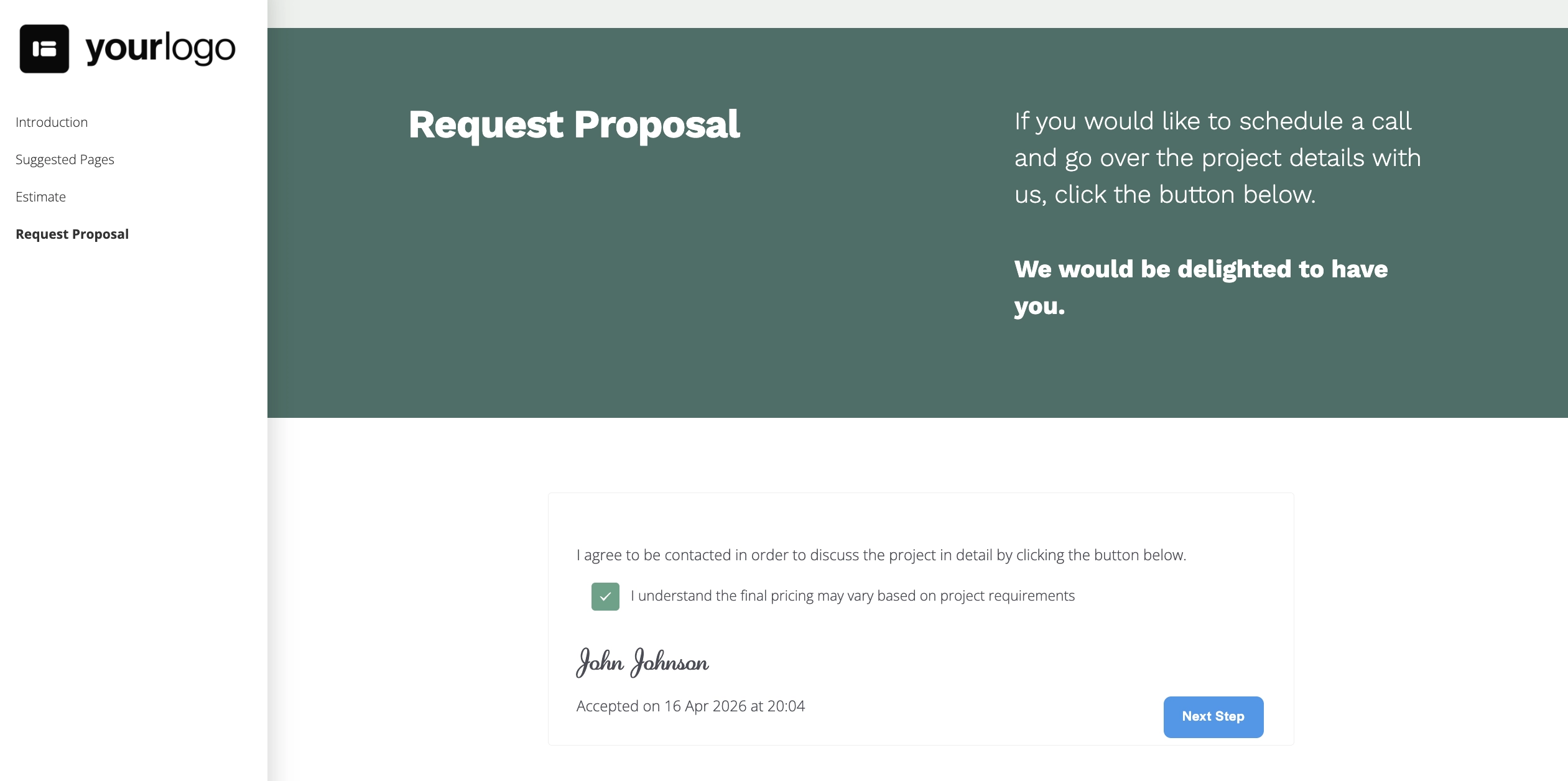
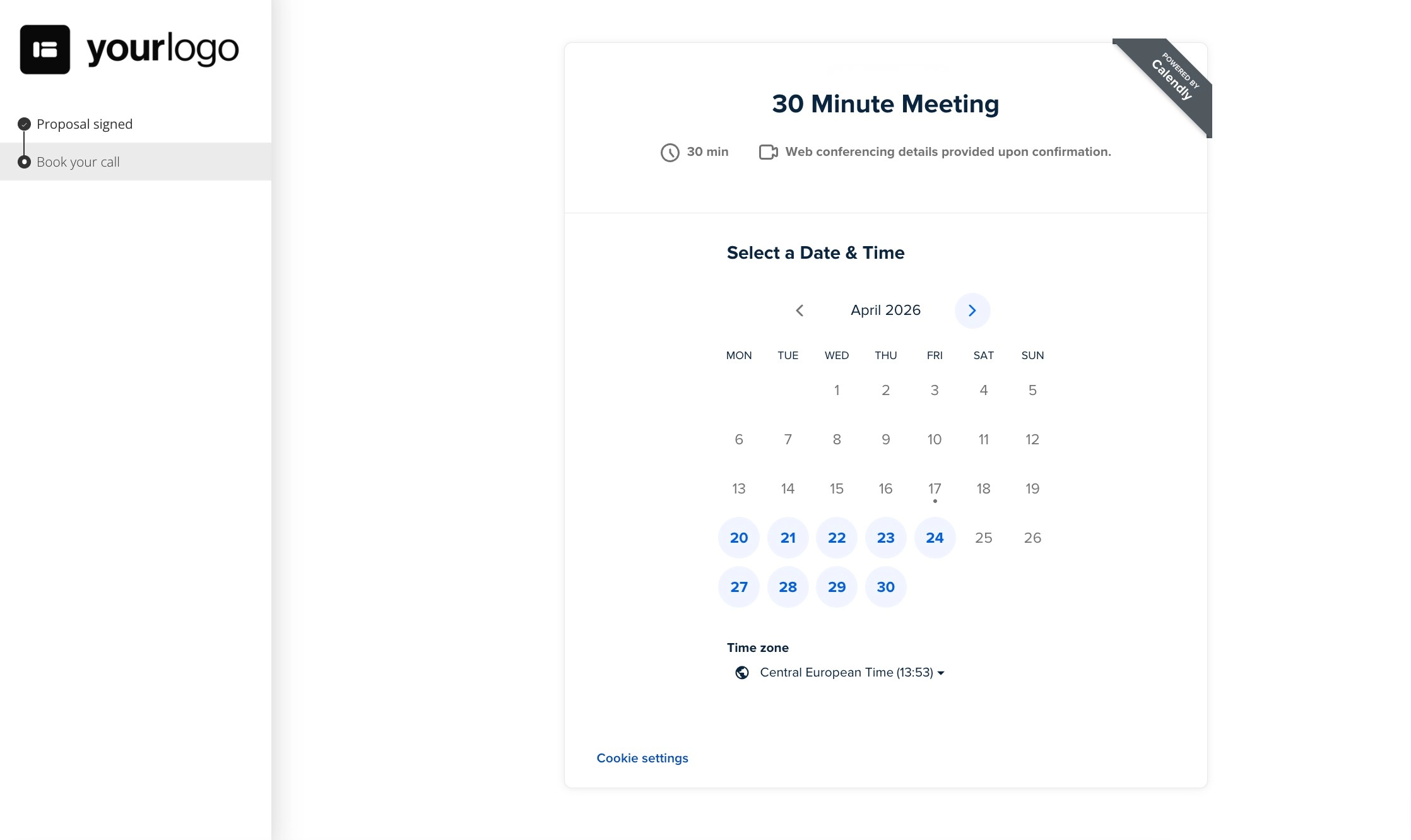
From there, you move them forward. They enter a simple onboarding flow where they can book a call and share the details you need to properly define the project scope.
Now you’re not guessing anymore. You take that same estimate, duplicate it, and expand it into a proposal. You define the scope, outline the timeline, and explain the approach.
You add the quote as a separate section of your proposal. Line items. Fixed price. Clear deliverables, maybe an optional add-on or two.
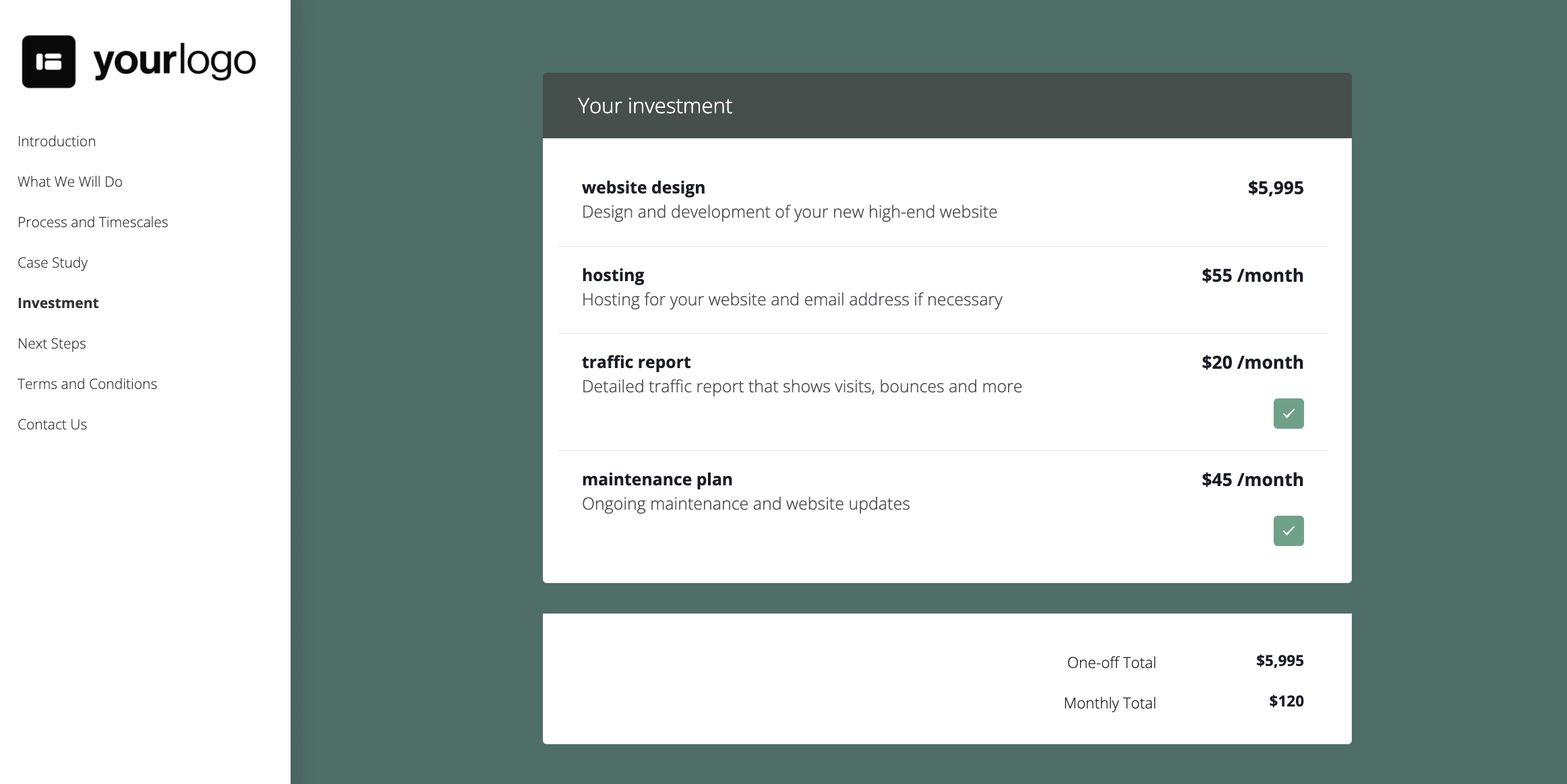
At the end, you add your terms. Now it’s the proposal and the full agreement in one document.
The client reviews everything in one place, signs it, and it becomes legally binding immediately. No separate contract. No chasing signatures.
And the final step happens right there, too - they pay the deposit directly from the document.
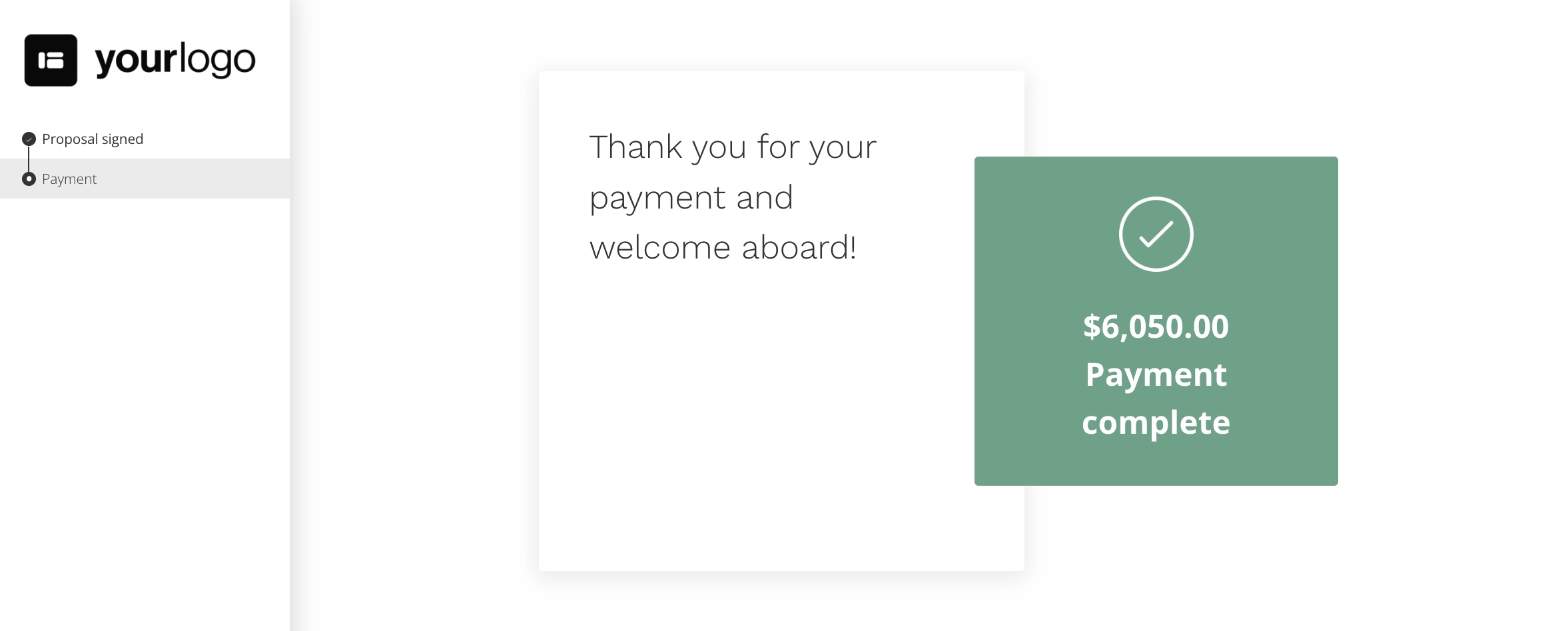
What used to be a messy, stitched-together process suddenly becomes one clean flow.
Final thoughts
At the end of the day, estimates, quotes and proposals aren't about terminology. They're about timing, clarity, and control.
Use them in the right order, and your sales process stops feeling like guesswork. Clients know where they stand, you avoid awkward pricing conversations, and decisions happen faster.
If you want to make this process easier on yourself, it helps to have a system that keeps everything consistent from the first estimate to the final signature.
That’s exactly what Better Proposals does. It brings your estimates, proposals, quotes, and payments into one simple flow, so you spend less time piecing documents together and more time actually closing deals.