Digital Signatures vs Electronic Signatures vs eSignatures: What's the Difference?

Looking up electronic signatures online should take about five minutes. Instead, you lose an hour of your life just to come out of it more confused than when you started.
One article tells you electronic signatures and digital signatures are the same thing. Another insists they're completely different. A legal website introduces three new terms you've never heard before.
Now you're wondering whether you need an electronic signature, a digital signature, an eSignature or a law degree.
You can safely cross the last one off the list as we'll clear up one third of the terminology problem in about 15 seconds.
What we'll cover:
- Electronic signature vs eSignature
- What is an electronic signature?
- What is a digital signature?
- Which signature will hold up in court?
- Electronic signature vs digital signature at a glance
- Which one is better?
First things first
Let's get the simplest thing out of the way first. An eSignature is just a shorter way of saying electronic signature.
That's it. There's no technical distinction hiding somewhere in the small print.
It's like saying "phone" instead of "telephone." One is shorter, both mean the same thing.
What exactly is an electronic signature?
When most people hear "electronic signature", they picture signing a PDF. In reality, an eSignature is any electronic method used to show that someone agrees to something.
This includes:
- Clicking "I agree" when creating an online account
- Accepting terms and conditions on a website
- Drawing your signature on a touchscreen to confirm delivery
- Pasting a scanned image of your signature into a document
- Signing through an online document platform
What do checking a box, drawing a signature, and uploading an image have in common? They all show intent, and that's all an electronic signature is concerned with.
An electronic signature isn't defined by the technology being used. It's defined by the fact that someone has taken action to indicate their agreement, approval, or acceptance.
That's why the category is so broad. Electronic signatures aren't a specific tool, feature, or technology. They're an umbrella term for any electronic method used to capture intent.
So where do digital signatures fit in?
A digital signature is a specific type of electronic signature.
Think of it as a jeans (digital signature) and pants (eSignature) situation. Not all pants are jeans, but all jeans are pants.
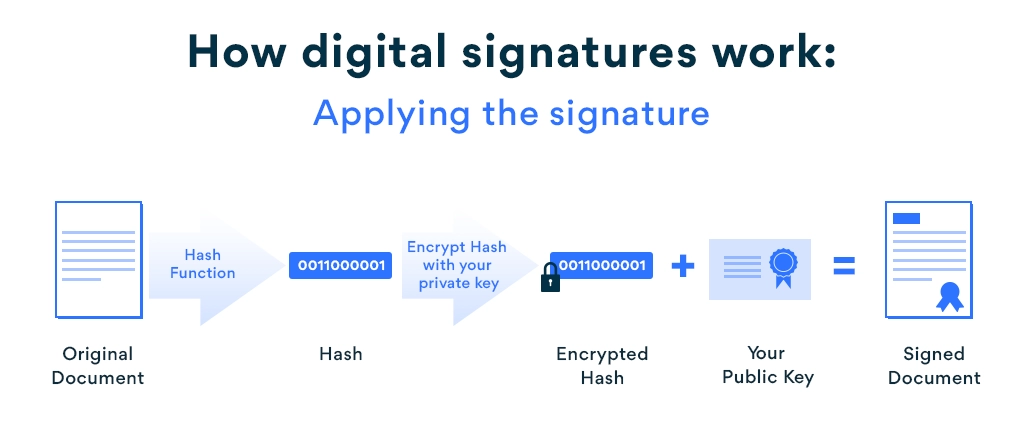
What makes a digital signature different from other types of eSignatures is verification. While any eSignature shows the intent to accept, a digital signature backs the intent up with evidence.
A digital signature verifies the signer's identity and detects whether a document has been changed after signing.
Since signatures are only really tested when something goes wrong, that extra proof matters.
The legal stuff
In many countries, the law generally focuses less on the type of signature and more on whether it can be trusted. In practice, that usually comes down to three things.
1. Can you identify the signer?
If a signature is ever challenged, the first thing you'll need to be able to show is who signed the document. This is where digital signatures give you more security than other types of electronic signatures.
For example, a scanned image of a handwritten signature is technically an electronic signature. But on its own, it doesn't prove who put it there. Anyone with access to the image could potentially copy and paste it into a document.
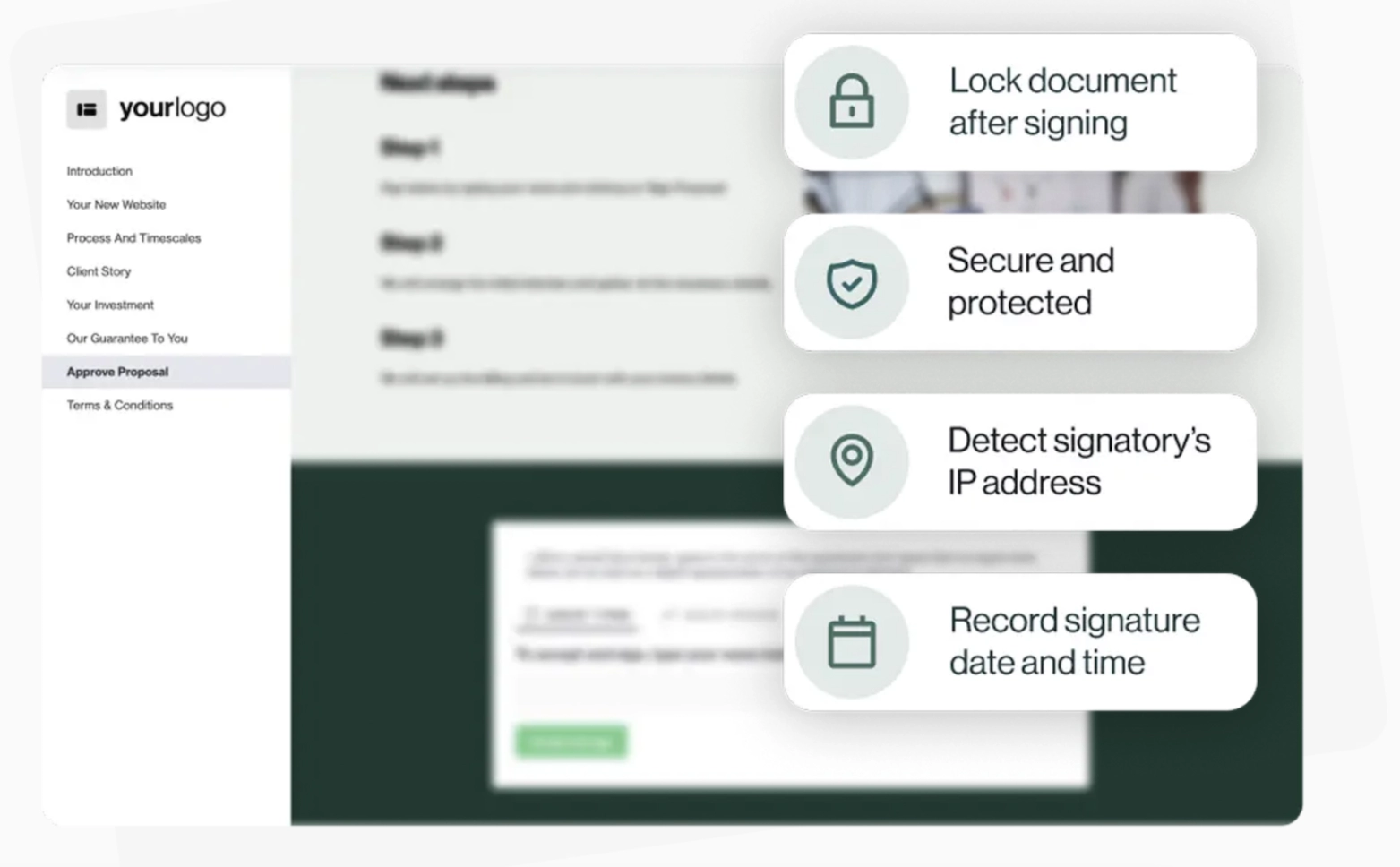
On the other hand, digital signature platforms record information such as who received the document, which email address it was sent to, when it was opened, and when it was signed.
Better Proposals takes it a step further by generating a unique document link per recipient, as well as recording the IP address from the signature location.
2. Can you prove intent?
Identifying the signer is only half the battle. You also need to show that they intended to sign the document and accept its terms.
This might sound obvious, but intent becomes important whenever a signer claims they never meant to approve the document in the first place or didn't realize what they were approving.
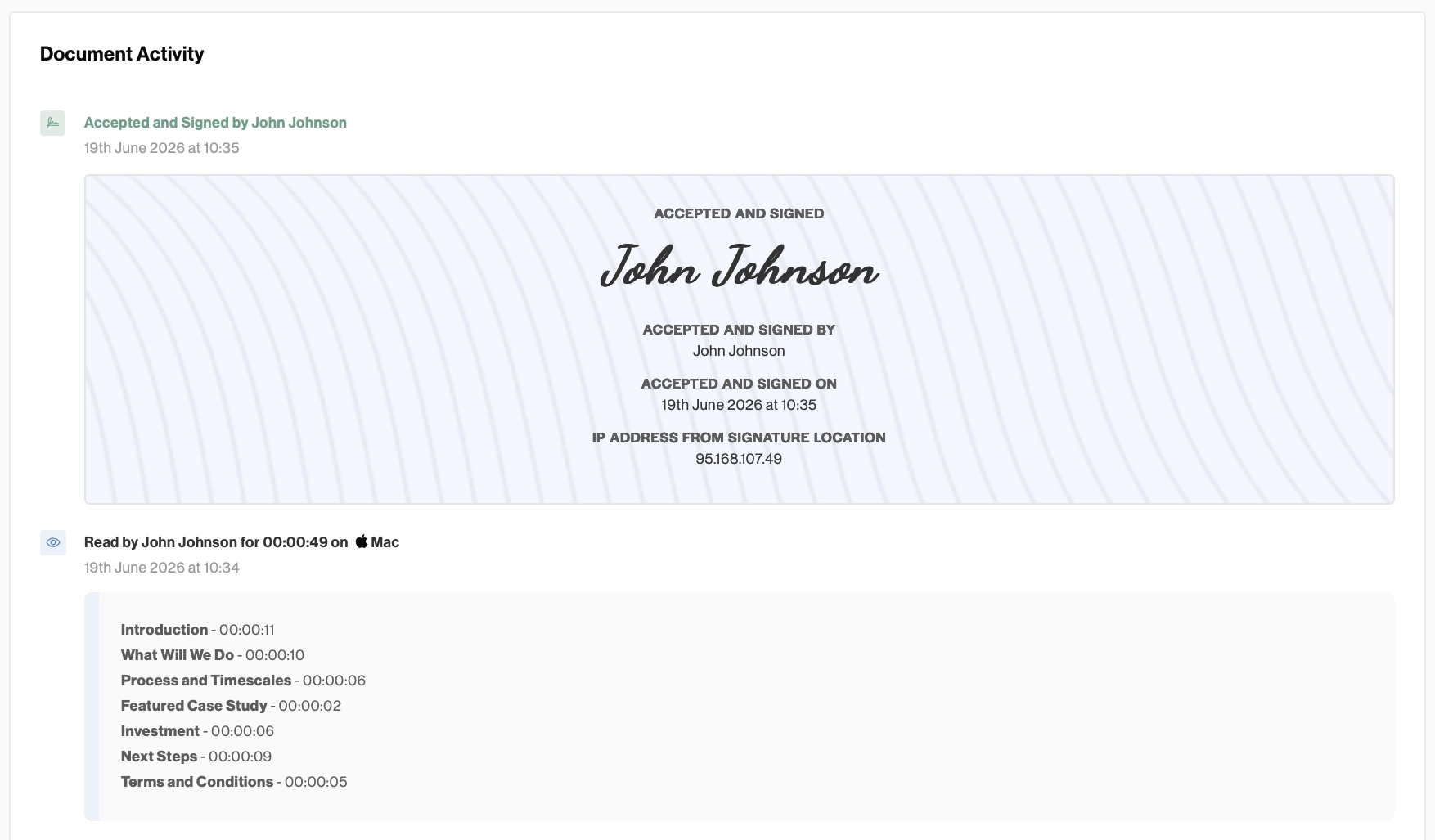
Digital signatures create a clear record of the signer's intent. For example, Better Proposals tracks the exact order in which the document was read, as well as how much time was spent on each section.
This creates a strong trail of evidence that the signer deliberately accepted the document after having reviewed it.
3. Can you prove the document hasn't changed after signing?
A signature only has value if it's attached to the same document that was signed. If you're relying on a signature image pasted into a Word doc, there's nothing stopping you or the client from making changes while leaving the signature right where it was.
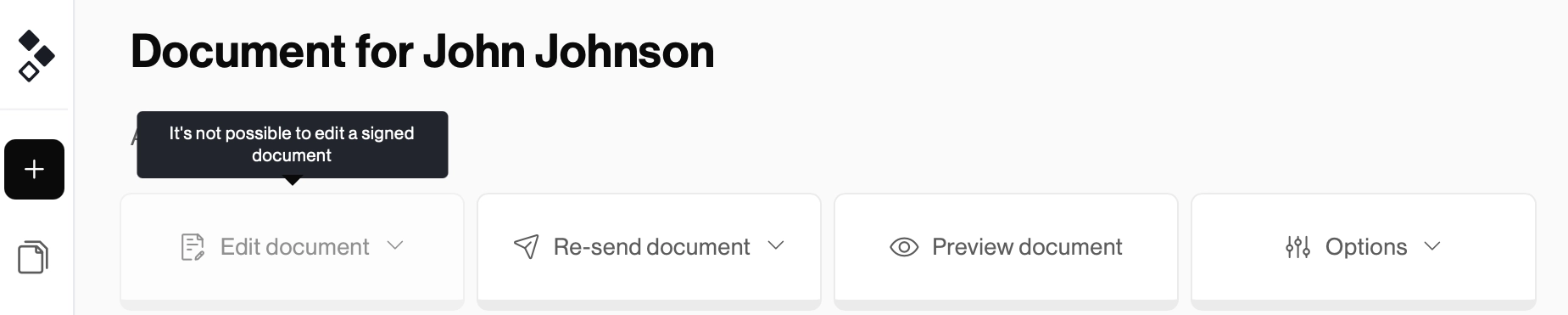
A digital signature has your back here as well. Once a document is digitally signed, any changes will invalidate the signature. In most proposal software, signed documents are also locked, making edits physically impossible.
Electronic signature vs digital signature at a glance
eSignature |
Digital signature |
| Umbrella term for various methods | Specific type of eSignature |
| Shows intent to agree | Shows intent and verifies document |
| Security levels vary depending on the method | High level of security and authenticity |
So which one should you use?
The answer depends entirely on what you're signing.
A basic eSignature is perfectly fine for internal approvals, delivery confirmations, or account registrations. The stakes are low, and proving exactly who clicked a button years later isn't going to keep anyone awake at night.
That said, if you're dealing with anything that could potentially end up in a dispute, a digital signature is the way to go. Think contracts, client agreements, sales proposals, employment paperwork.
If someone later claims they never signed the document or didn't understand what they were agreeing to, there's a clear audit trail to fall back on.
In other words, if all you need is a way for someone to say yes, an eSignature will usually do the job. But if you need to prove who said yes, when they said it, and what exactly they agreed to, that's where a digital signature earns its keep.
The bottom line
The reality is that most signatures are never questioned. The document gets signed, the project moves forward, and everyone goes about their day.
But signatures aren't really designed for the good days. They're designed for the bad ones.
If a dispute ever arises, that's when you'll be glad you chose a signature that can do more than just capture a name. Try Better Proposals free and see how easy it is to collect legally binding digital signatures.