Project Proposal Template: Write a Winning Project Proposal (+ Real Example)

The average project proposal is packed with things clients care very little about:
- A lengthy company history
- Mission statements
- Pages of credentials
- Stock photos of smiling people in meetings
- Buzzwords that nobody uses in real life
Then, somewhere around page 12, you finally discover what the project actually involves. By that point, the client is either asleep or wondering whether you understood the assignment.
The good news is, writing a strong project proposal is much easier than many people think. To show what that looks like in practice, we'll look at a real website redesign proposal, along with a template you can use for your own projects.
What we'll cover
What is a project proposal?
Technically, a project proposal is a sales document. You're asking a client to choose your services and invest in your solution.
That said, all the best project proposals have one thing in common: they read like plans rather than sales documents.
At the point when you send out a project proposal, clients already know you're trying to win the work. You don't need an elaborate pitch to remind them.
What they're looking for is evidence that you've understood the project, that you have a solution, and how you plan on implementing it. By the time they're done reading your project proposal, the client should be able to picture the finished result and feel confident you're the right person to deliver it.
The structure of a winning project proposal
You don't need fifty pages, elaborate graphics, or a rundown of your entire team to win the job. You need clarity, and the structure below is designed to provide exactly that.
1. The cover page
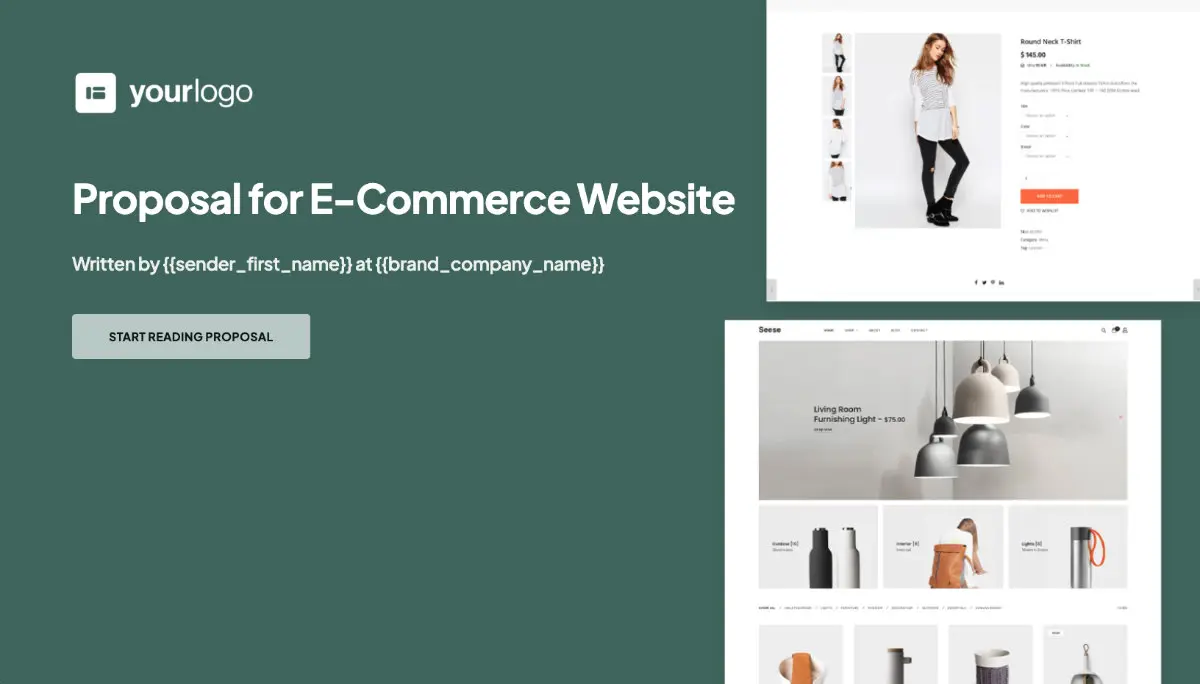
The cover page is your first impression. It should clearly state who the proposal is for, who it's from, and what project it's about.
Keep it simple. The goal is to make the proposal feel professional and tailored to the project.
2. The introduction
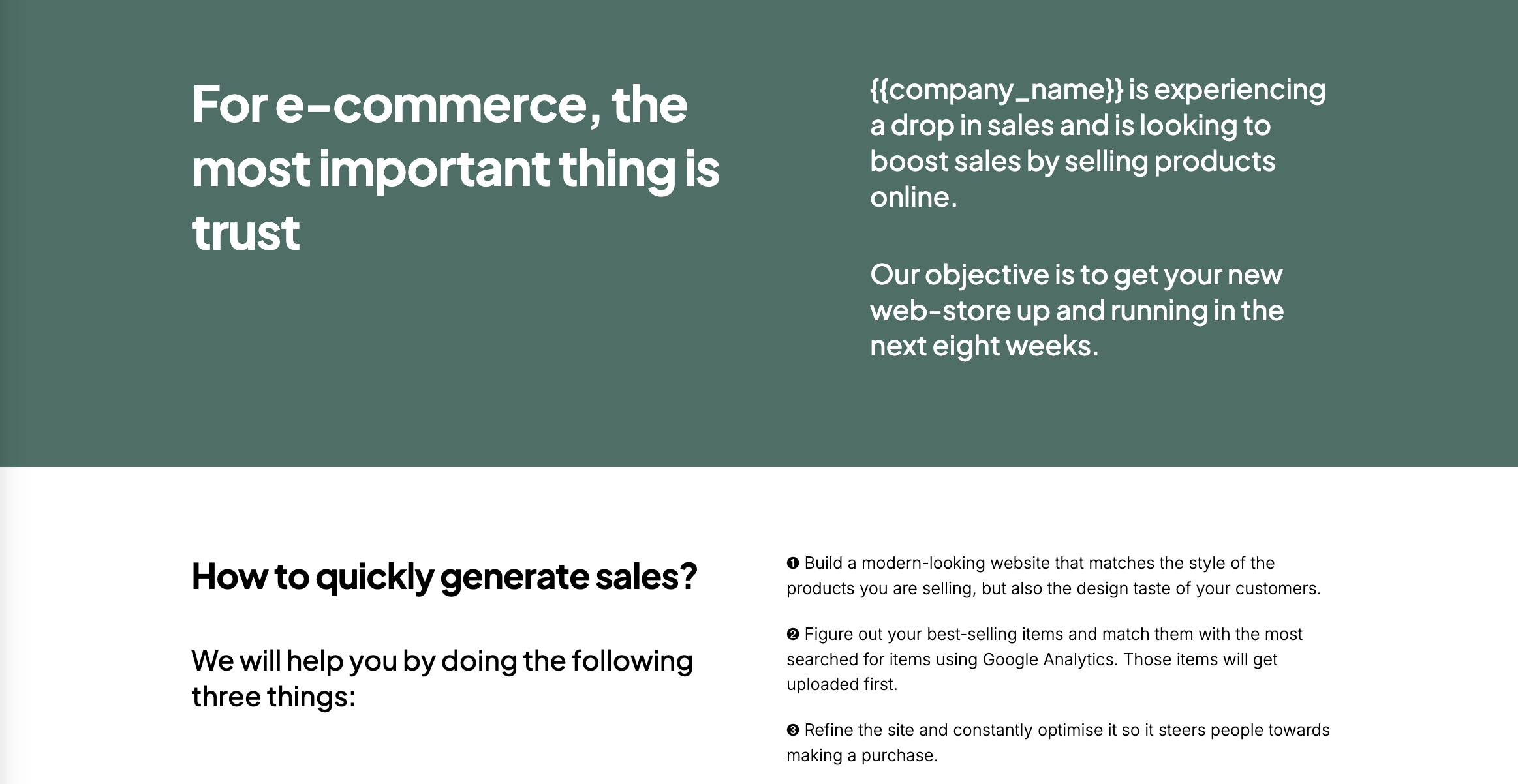
Before clients buy your solution, they have to buy into your understanding of the problem.
The data across tens of thousands of proposals sent through our system over the years shows the introduction is one of the two most read sections. The only section that gets more attention than the introduction is - you've guessed it - the pricing.
Still, we see businesses waste the introduction on talking about themselves every day. They open with company history, then sprinkle in some adjectives about how passionate, innovative, or agile they are.
Wrong move. Clients don't care about any of that, at least not yet.
What they're looking for in the introduction is a reason to keep reading the rest of the proposal.
The best introductions borrow heavily from the discovery call. They reference the challenges the client mentioned, the goals they want to achieve, and the problems they're trying to solve.
If your introduction feels like it could have been sent to anyone, it's not doing its job. The client should be able to read it and think, "Yes, that's exactly our situation."
3. The scope
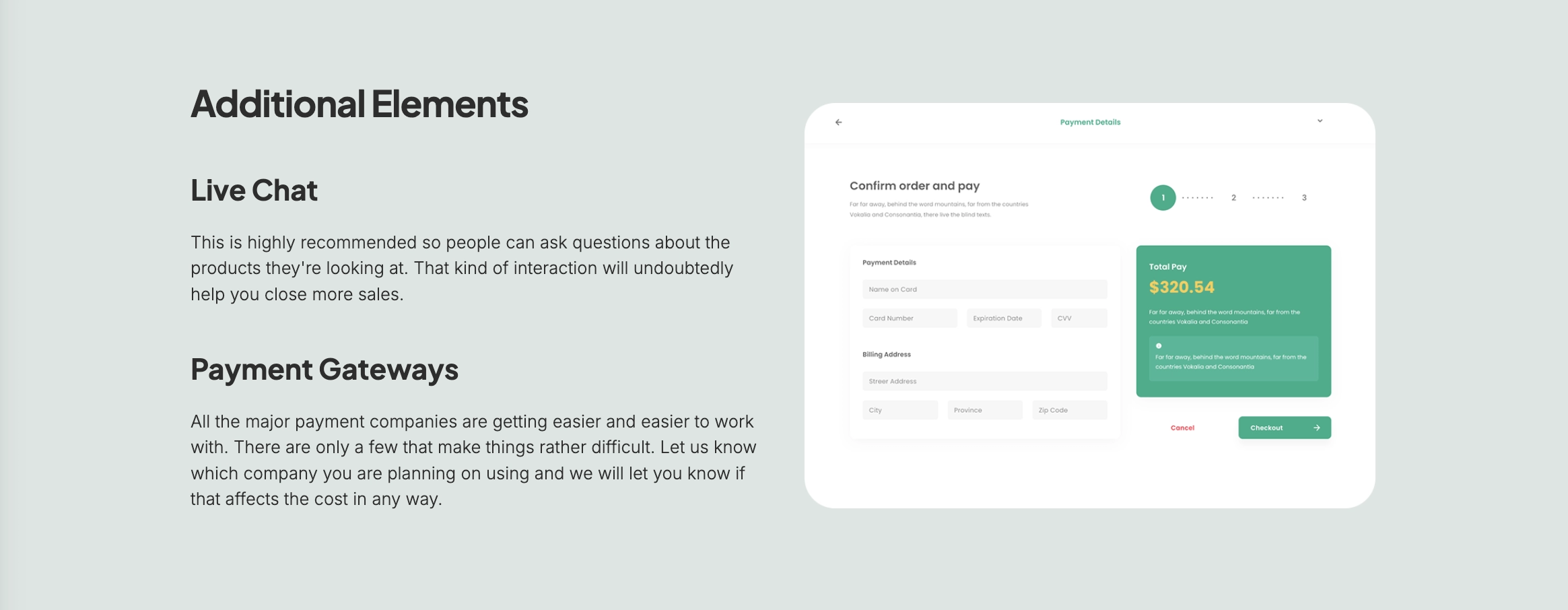
There are two major mistakes you can make with the scope of work section: leaving it out completely or keeping it vague.
The scope is where you explain exactly what's included in the project and what isn't. The more specific you can be here, the better.
Many businesses worry that being too detailed will overwhelm the client. In reality, clients are far more likely to approve a project when they understand exactly what they're getting.
Speaking of understanding, keep the scope in plain English. This isn't the place for technical jargon, internal terminology, or acronyms.
4. The timeline
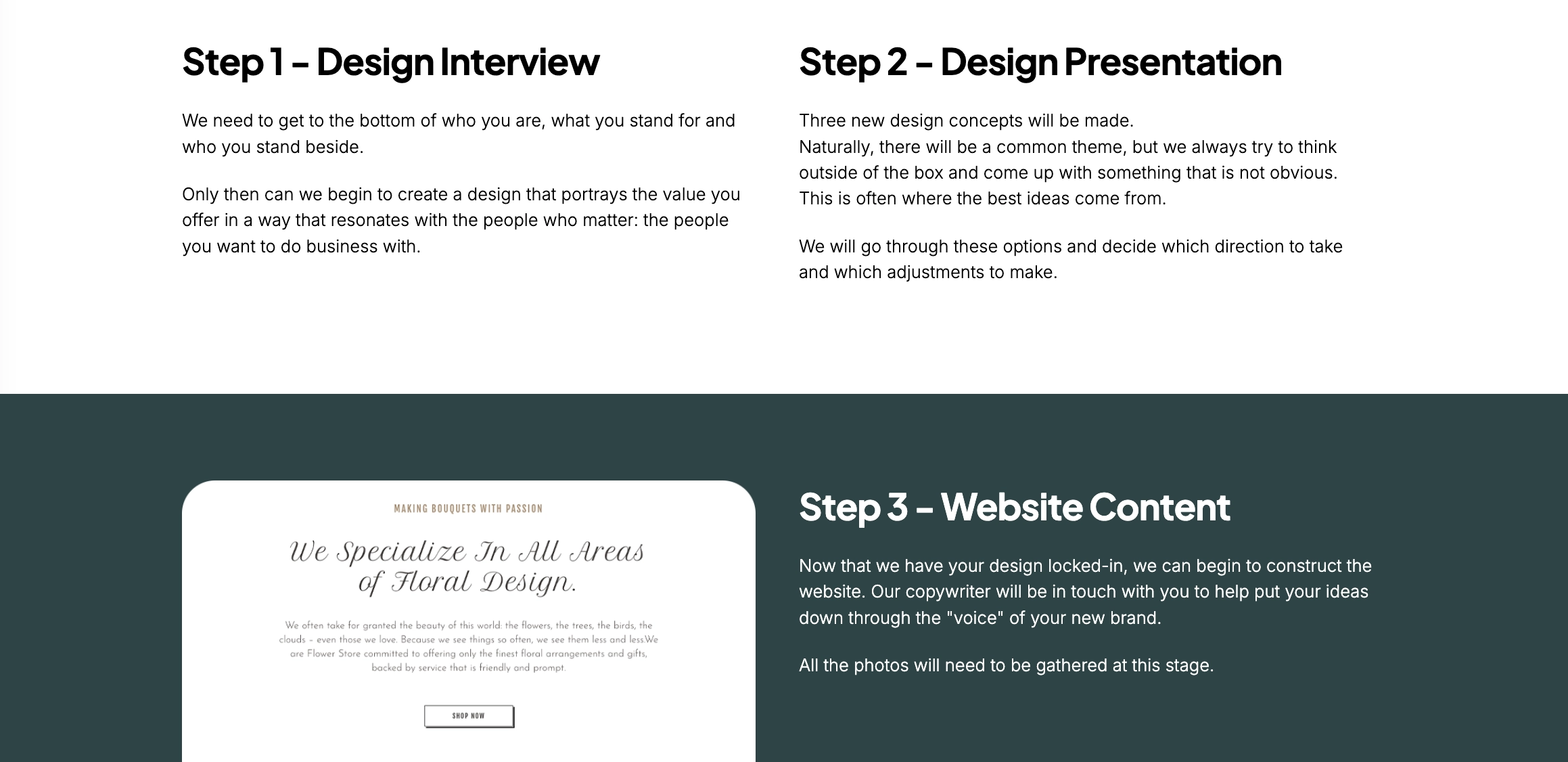
"How long is it going to take" is a question every client wants answered before approving a project.
A good timeline shows that you've thought the project through. It breaks the work into clear phases, sets expectations, and helps the client visualize the finish line.
The biggest mistake you can make here is be overly optimistic with timelines in an effort to win the job.
If a website redesign will realistically take 12 weeks, don't promise to deliver it in six. Even if you do end up working 14-hour days to make the deadline, not every delay is within your control.
Clients need time to review designs, approve deliverables, and provide feedback. Building some breathing room into your timeline is usually a smarter move than creating deadlines you'll struggle to meet.
5. The proof
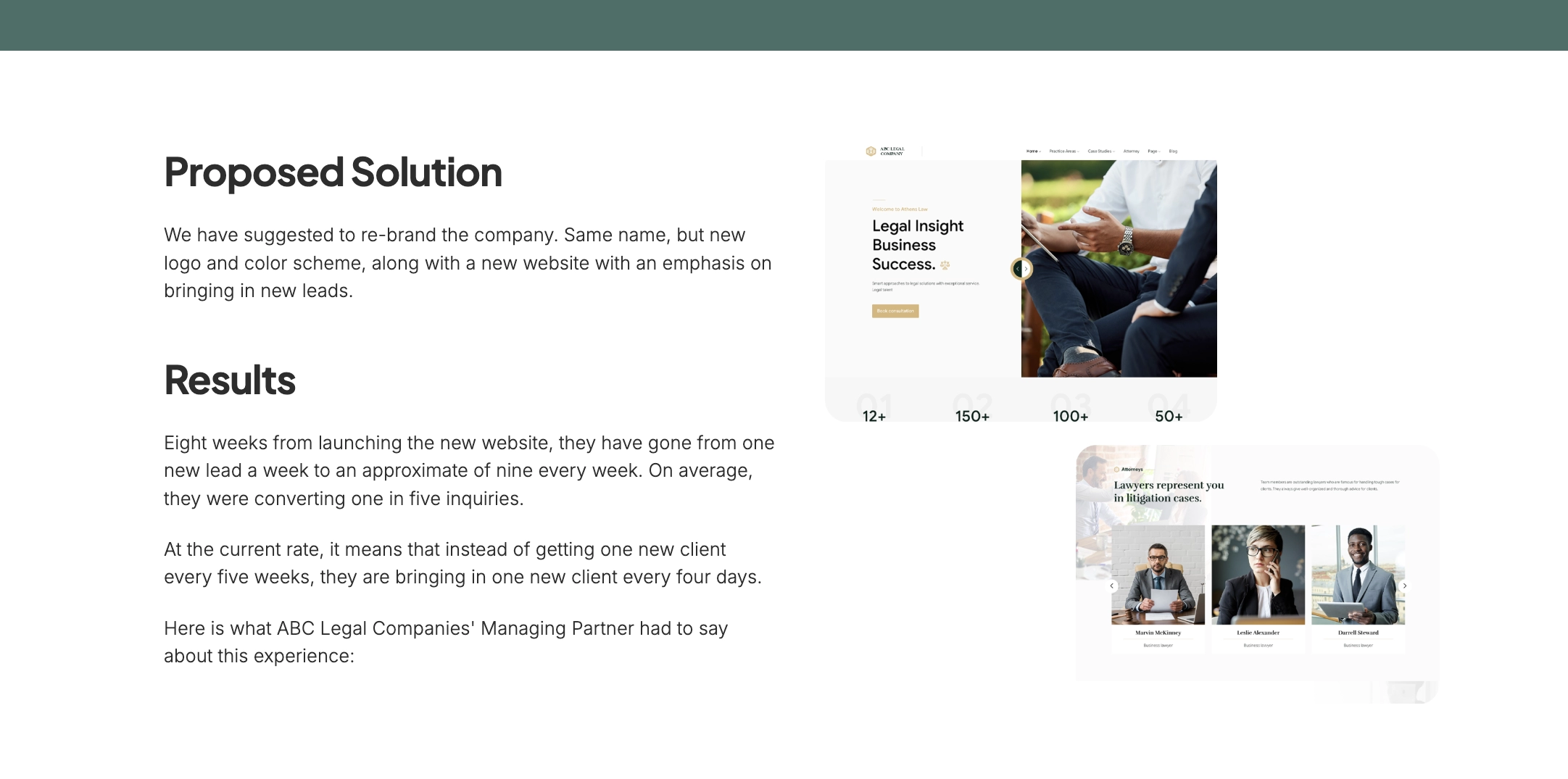
A relevant case study will outperform a generic list of credentials any day of the week. The closer the example is to the client's situation, the better.
Testimonials, case studies, examples of previous work, and measurable results all belong here. The goal is to reassure the client by showing you've successfully handled a similar project in the past.
By the time they reach the end of this section, they should feel like you're capable of delivering what you've just outlined in your project proposal.
6. The pricing
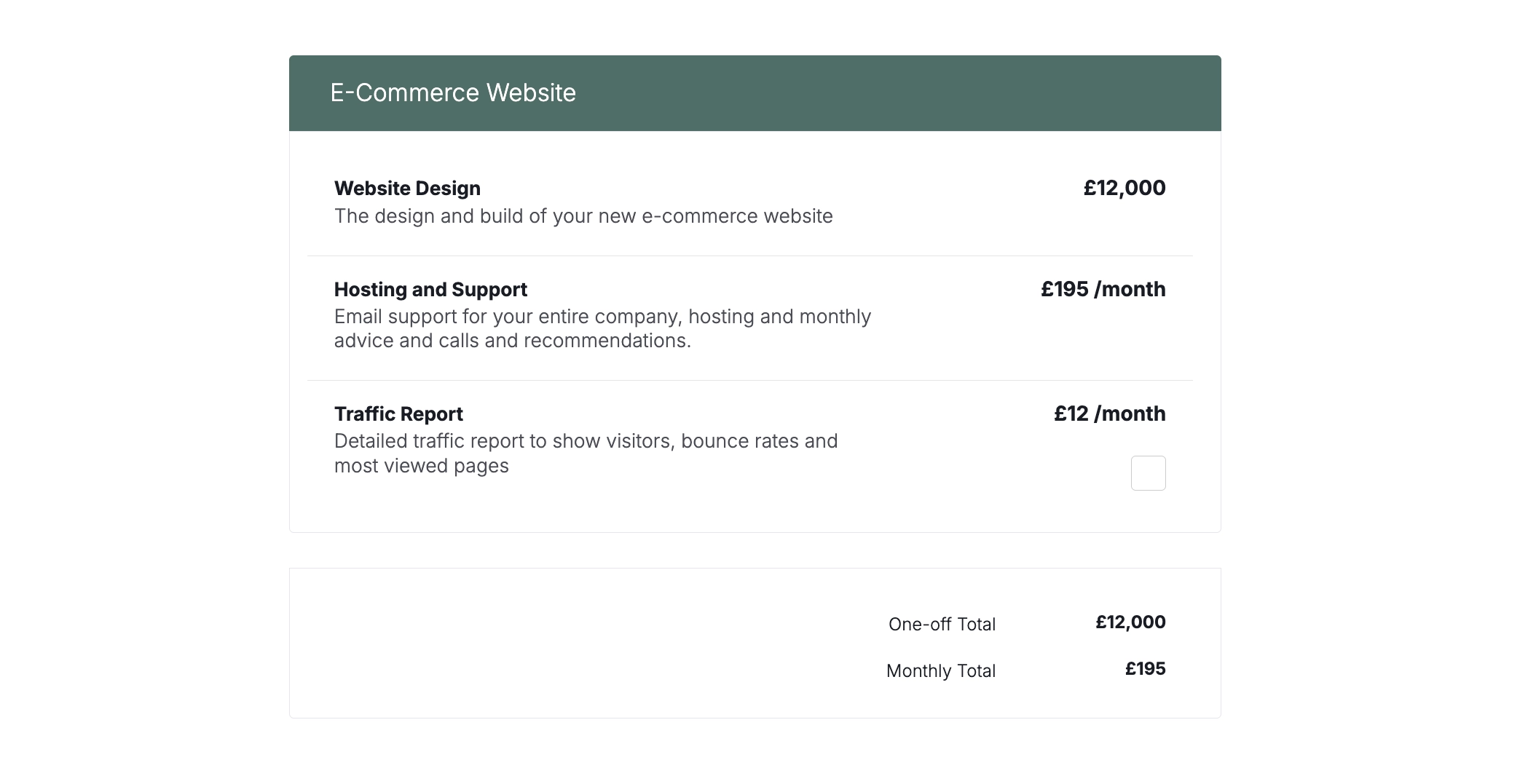
The number one section clients spend the most time on, and almost always the one they skip over to right after the introduction.
One mistake people make regularly is not keeping the pricing simple. They hide costs, use vague descriptions, or present numbers and discounts in a way that makes you want to break out a calculator.
Don't make clients work for the answer. A good pricing section should be clear, transparent, and easy to understand. Break costs down where appropriate, explain what's included, and make any optional extras obvious.
Bonus tip: Add a guarantee
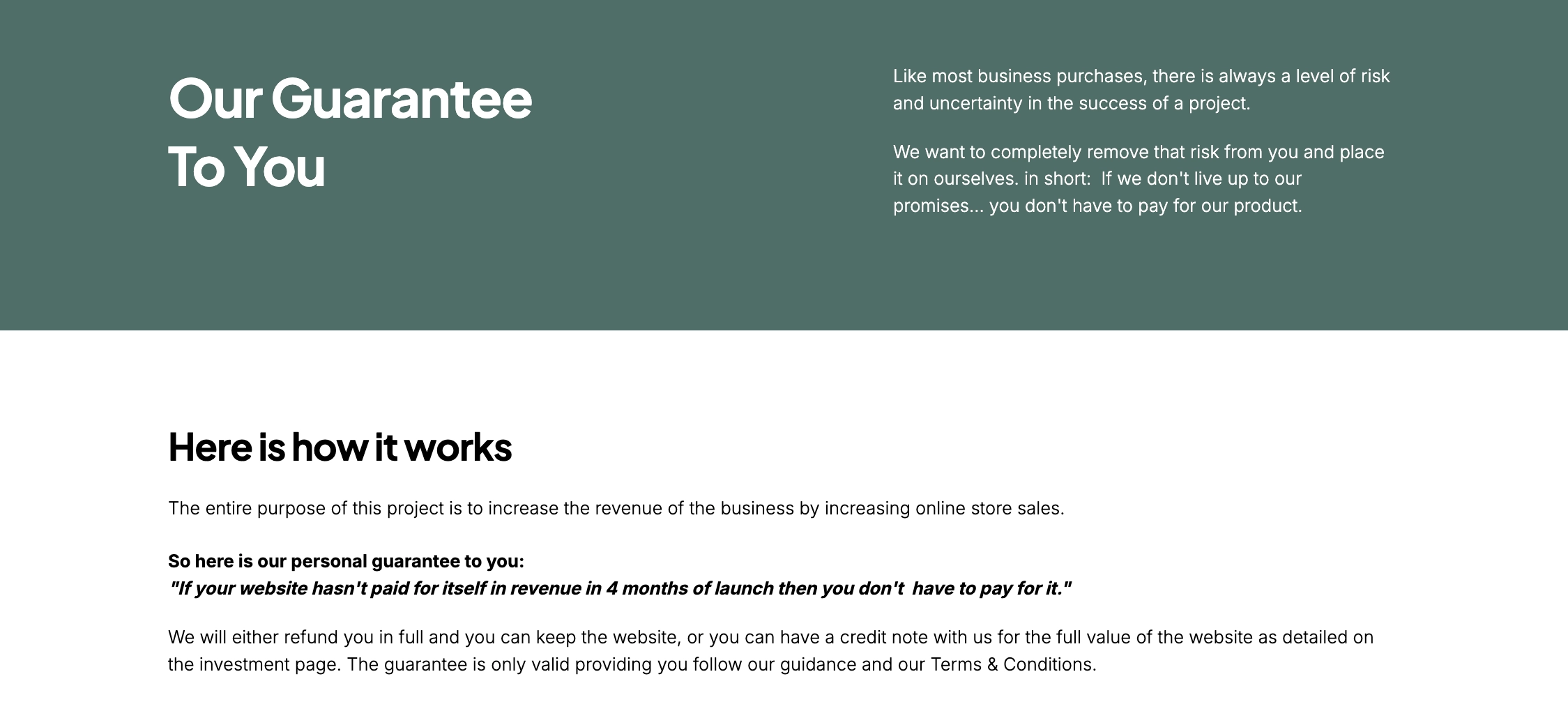
A simple guarantee can help reduce risk in the client's mind before they make a decision. A post-launch support period, a fixed-price commitment, or a promise to fix any bugs discovered within 30 days can all work well.
The exact guarantee matters less than the message it sends: "We're confident enough in our work to stand behind it."
7. The next steps
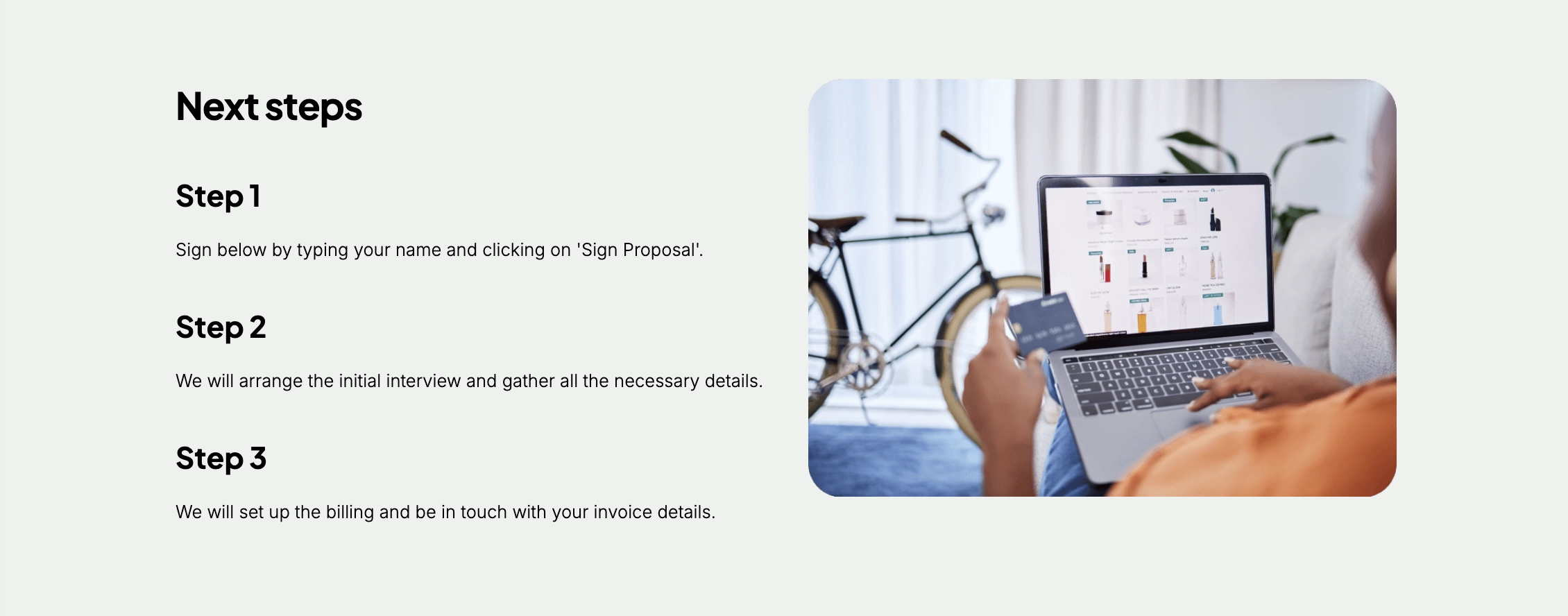
You'd be surprised how many proposals end without telling the client what happens next.
Once a client has decided they want to move forward, the process should be obvious.
Do they need to sign the proposal? Pay a deposit? Book a kick-off call?
Tell them and make it easy to do.
8. The terms
Everyone's least favorite section of a project proposal, but an important one nonetheless.
This is where you'll cover payment terms, ownership of work, project delays, revisions, change requests, and anything else that could affect the project once it's started. This is also the one section you'll most likely need to only write once, as you'll be able to reuse it across similar projects.
A real-life project proposal example
So, that was the theory of it. Now, let's look at what a good project proposal looks like in practice.
The example below is a real website redesign proposal sent to us by an agency. We've removed identifying details, but the structure remains exactly the same.
Final thoughts
By now, you've probably noticed a pattern. Every section in a winning project proposal answers a question the client was going to ask anyway.
Get that right, and you're already ahead of most proposals that land in your client's inbox.
If you're ready to create your own, we've got an entire library of proposal templates that you can make your own. They're designed around the same principles covered here, so you can spend less time formatting documents and more time winning work.