Understanding Pricing Documents: What Is a Quote and When Do You Need One?
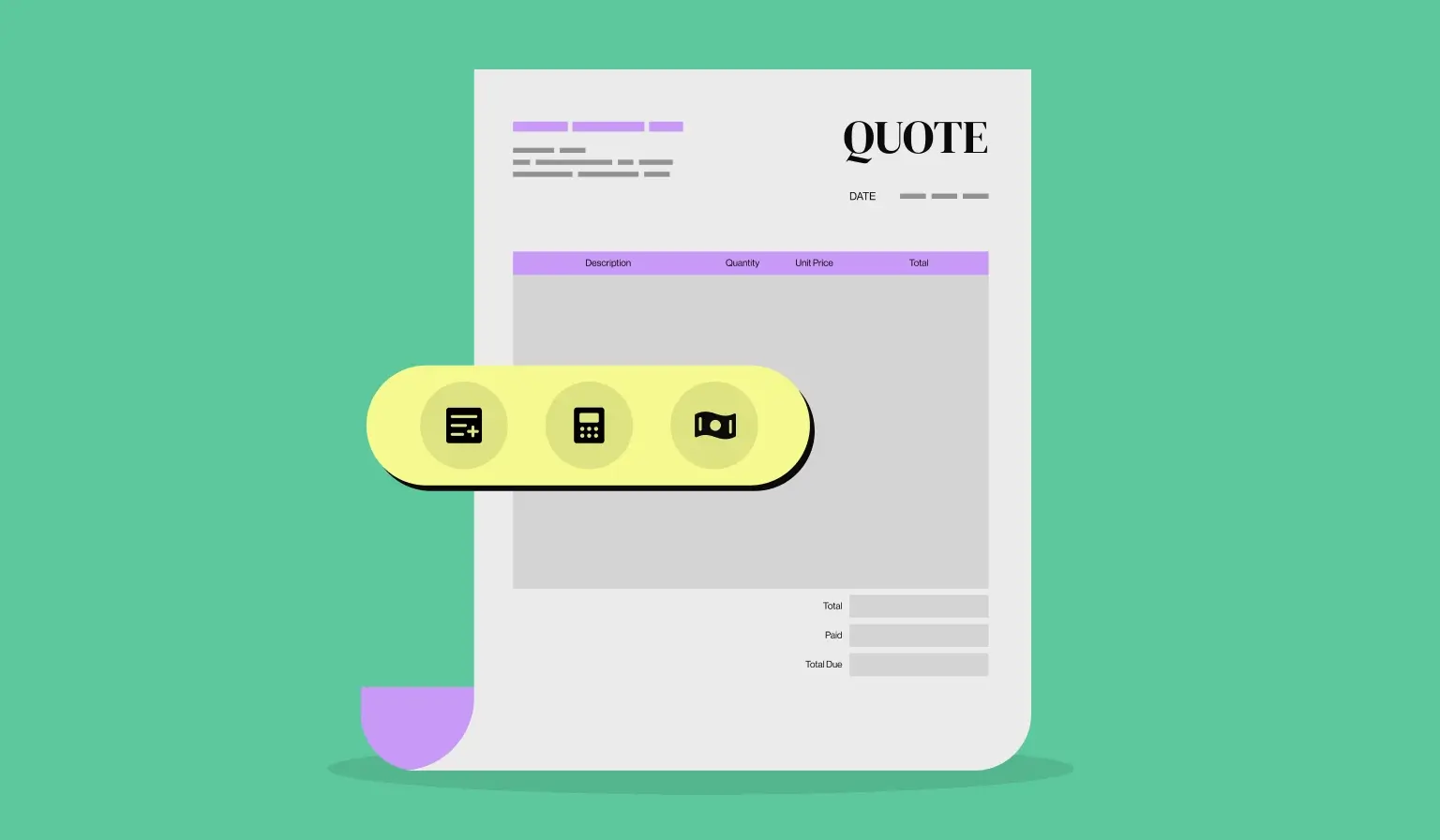
Like most business documents, quotes exist for one simple reason, and that's to stop people from arguing later. The problem is, terms like quote, proposal, estimate, and invoice often get thrown around as if they mean the same thing.
And while they all include some sort of pricing, they serve different purposes and appear at different stages of the buying process. So, before you send a quote, here's what it implies and what other options you have.
What we'll cover
What is a quote in business?
A quote is a formal document that outlines the cost of specific products or services before work starts. It tells the buyer:
-
What they’re getting
-
What it costs
-
What’s included
-
When it will be delivered
-
Under which terms
Once the customer accepts your quote, that's it - you're doing the job for the price you've named and they agreed to.
What makes a good quote?
All good quotes are based on clearly defined work. The seller understands the scope, the buyer understands what’s included, and both sides know what they’re agreeing to.
At a minimum, a quote should include:
-
Your business details
-
The customer’s details
-
A breakdown of products or services
-
Pricing and taxes
-
Delivery or completion timelines
-
Payment terms
-
What is and isn’t included
-
Quote expiry date
That last one matters more than people think. Prices change, suppliers increase costs.
Without an expiry date, an old quote can reappear months later attached to an email saying “We're ready to move forward now”. Not really the start of a pleasant conversation if you've increased your pricing since.
Make this example quote your own

Quote vs estimate vs proposal vs invoice
1. Quote
Buyer expectation: Tell me what this costs.
Timing: After defining the scope, before agreeing to buy.
Sending a quote too early because you're racing to win the job is a great way to lose money, annoy your client, or both. Never send a quote before everyone 100% agrees on the scope.
Otherwise, the small website update you quoted for will grow into six landing pages, a CRM integration, and somebody’s cousin thinking the homepage should feel more premium.
2. Estimate
Buyer expectation: Give me a rough idea.
Timing: Early discovery phase, before scope is defined.
The key difference between an estimate and a quote is that an estimate isn't binding. It doesn't imply the total amount is final because there are still too many unknowns.
At this point, the client is looking to see whether the project fits into their budget before investing time into detailed calls, meetings, and planning, only to realize they can’t afford it anyway.
3. Proposal
Buyer expectation: Convince me your solution is the best fit.
Timing: After a detailed discovery call, before agreeing to buy.
By the time you need to write a proposal, the client already has a rough idea of the budget. Now they want confidence that you actually understand what they need. This is where you explain all the details:
-
Your approach
-
Your process
-
Expected outcomes
-
Timelines
-
Deliverables
-
Why you're the right fit for the job
While proposals often include a quote, they're more persuasive than transactional. The proposal sells the thinking, and the quote added to it confirms the pricing.
When clients compare proposals, they're no longer just looking for the best deal as they would with quotes. Instead, they're comparing expertise, trust, and confidence in the outcome.
4. Invoice
Buyer expectation: This is the amount I owe for the work.
Timing: After the work has been completed.
As far as pricing documents are concerned, an invoice is the last thing you'll send to your client. At this point, the work is done, delivered, or approved, and you're now requesting payment.
A typical invoice is just a short summary of what the client is paying you for, and it includes:
-
The amount due
-
Payment deadline
-
Invoice number and issue date
-
Itemized breakdown of all the products or services billed for
-
Payment methods
-
Your business name, address, and other company details
-
Your client's details
-
Any taxes or discounts applied
-
Late fees added in case of overdue payments
Final thoughts
Using the right document at the right time makes a huge difference in how smoothly your sales process runs. Instead of juggling spreadsheets, Word docs, PDFs, and email attachments, Better Proposals keeps all your sales docs in one place. Clients always know exactly what they’re agreeing to and your team spends less time chasing approvals and signatures. Try it today and see for yourself.